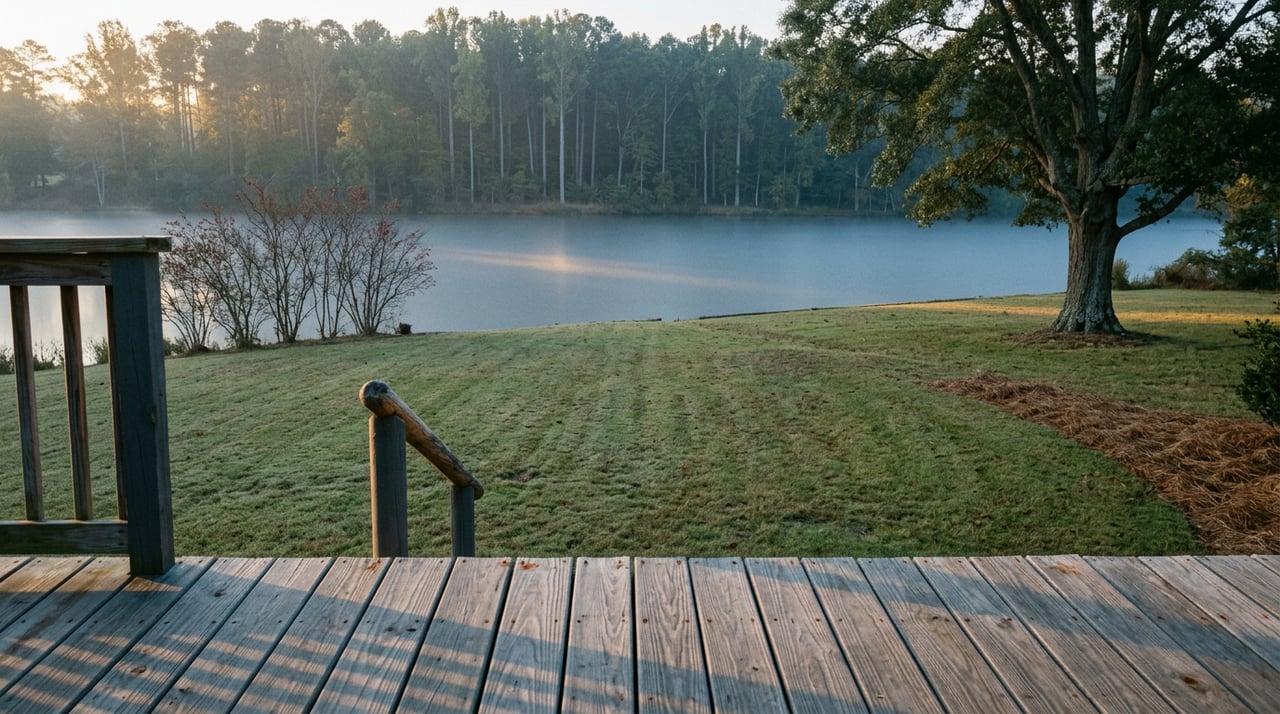
Picture the closing table. You've signed everything, the keys are in your hand, and the listing photos showed a dock stretching out into Watts Bar Lake that made the whole decision easy. What almost nobody flags at that table is a piece of paper that has nothing to do with the deed: the Section 26a permit that actually governs whether you're allowed to keep that dock there at all.
That permit belongs to a person, not a property. When ownership changes, the permit doesn't follow the sale automatically. It has to be re-requested, on a clock, or the new owner can lose the right to the exact structure they thought they just bought.
The dock and the permit are two different things
The Tennessee Valley Authority owns or controls the land between most Watts Bar shorelines and the water itself, a strip known as the flowage easement or shoreline management zone. Anything built on or over it, a dock, a pier, a boathouse, a seawall, exists because TVA issued a Section 26a permit allowing it, not because the homeowner's deed says so. Whoever's name is on that permit is the person TVA holds responsible for the structure.
When the property sells, TVA is explicit that permits do not transfer with the sale. The buyer has to apply for a Transfer of Ownership, and only a dock that's currently in compliance with its original permit qualifies. If the previous owner never filed for a permit in the first place, there's nothing to transfer. TVA treats the structure as unauthorized, which means it isn't grandfathered into whatever older, looser rules applied when it was built. It gets reviewed against today's standards, and if it doesn't measure up, TVA can require it removed at the new owner's expense.
The 60-day clock most buyers never hear about
Here's the part that catches people off guard even when the previous owner did everything right. TVA gives the new owner 60 days after closing to file that transfer application. Miss the window, and the structure loses its grandfathered status, which can mean starting over under current regulations rather than simply re-registering what was already there.
If you're buying a lot that doesn't have a dock yet and you're planning to build one, the timeline gets longer, not shorter. TVA's own shoreline permit FAQ tells applicants to expect up to 120 days to process a permit application, and anything involving a boat ramp or dredging routinely adds several more months on top of that. A buyer who assumes they'll be on the water by Memorial Day because they closed in March is often working from a schedule TVA never agreed to.
| Situation at closing | What's required | Typical timeline |
|---|---|---|
| Dock exists, permit is current | File a Transfer of Ownership within 60 days of closing | Weeks to a few months, subject to TVA's standard review queue |
| Dock exists, no permit was ever filed | Apply as if for new construction, no grandfathering | Up to 120 days per TVA's own estimate |
| No dock yet, lot is TVA-eligible | New Section 26a application with project drawing and fee | 100 to 150+ days, longer for ramps or dredging |
The fee itself isn't trivial either. TVA's own online application portal notes the application fee changed in the recent fee update, and permit services working across Watts Bar and neighboring lakes now quote a flat $1,000 for a standard minor shoreline alteration application, a cost that applies whether you're building fresh or bringing an existing structure current.
Why this matters more on Kingston's end of the lake than it might elsewhere
Watts Bar isn't a lake where the dock is a three-month summer prop. TVA holds the reservoir near 740 to 741 feet through the warm months, then begins a modest drawdown on November 1 toward a winter minimum around 735 feet, a swing of roughly five to six feet. Compare that to a tributary reservoir like Norris Lake, where winter pool can drop 30 feet or more, and it's clear why Watts Bar docks stay usable across nearly the entire year instead of sitting on mud flats for a season. That stability is a real part of what Kingston lakefront buyers are paying for, and it's exactly why a lapsed or unauthorized permit is a bigger loss here than it would be on a lake where the dock is only functional four months a year anyway.
That premium shows up in how the market has been pricing Kingston's waterfront tier. Listings tracked in late February 2026 showed roughly two dozen Kingston waterfront homes on the market with a median asking price a bit over $400,000, a figure that reflects genuine lake access rather than proximity alone.
Not every waterfront-adjacent lot in the Kingston market carries the same dock status, and that's where buyers get tripped up on marketing language. Some gated shoreline communities sell lots explicitly as dockable with TVA approval, meaning the eligibility exists but the actual permit still has to be requested and processed after purchase, not before. Other lots in the same general area are marketed honestly as lake view only, with no TVA approval for a private dock at all, community access being the tradeoff for a lower price point. The difference between those two categories on paper looks small. The difference in what you can actually do with the property in your first season is not.
What to check before you write an offer
The fix for all of this is straightforward, it just has to happen before the offer goes in, not after the inspection period closes.
- Ask the listing agent for a copy of the current Section 26a permit, not just confirmation that a dock exists
- Walk the shoreline against that permit's drawing to confirm the structure as built matches what TVA actually approved, including second-story coverings, since a roofed second level that wasn't in the original permit is a common violation that can force removal
- Confirm whether the current owner ever completed their own Transfer of Ownership, since a chain of unfiled transfers compounds the problem for every buyer after
- If the lot has no dock yet, treat the 100 to 150 day permitting window as part of your move-in timeline, not an afterthought
None of this is a reason to avoid Watts Bar. It's a reason to read the paperwork with the same care you'd give the home inspection.
A few questions worth asking early
Does every waterfront lot in Kingston come with the right to build a dock? No. Some subdivisions sell lots as dockable subject to TVA approval, which still requires its own application after purchase, and some lots are sold as lake view only, with no TVA authorization for a private dock at all.
What happens if the seller never filed for a permit on an existing dock? TVA does not grandfather unpermitted structures. The new owner has to apply as if the dock were new construction, and TVA can require changes or removal if it doesn't meet current standards.
Can the process move faster if I hire a permitting service? A local permitting service can help prepare a complete application and catch errors that cause delays, but they don't control TVA's own review queue, so the 100 to 150 day window is a reasonable expectation either way.
If you're weighing a Watts Bar purchase in Kingston, the dock paperwork is worth a conversation before you fall in love with the listing photos. Katina Ramsey has spent more than 30 years working East Tennessee's lake markets and can walk you through what a specific property's permit history actually says before you write an offer. Browse current thinking on Kingston's lakefront market, read the fuller guide to buying a lakefront home in Kingston, or reach out directly to start the conversation.